
Smart Glass Installation & Replacement in Santa Clara, CA
Santa Clara Glass Inc. provides smart glass and switchable privacy glass solutions for residential and commercial properties throughout Santa Clara and Silicon Valley. Smart glass allows a glass surface to change between a transparent and privacy state, giving you control over visibility without relying on conventional blinds, curtains, or permanent frosted glass.
We work with smart glass and smart film applications for offices, conference rooms, private spaces, homes, doors, windows, and interior glass partitions.
Depending on the project, we can install new switchable glass or evaluate existing glass for a smart film retrofit.
Smart glass is especially useful when a space needs to balance privacy, natural light, modern design, and flexible visibility.
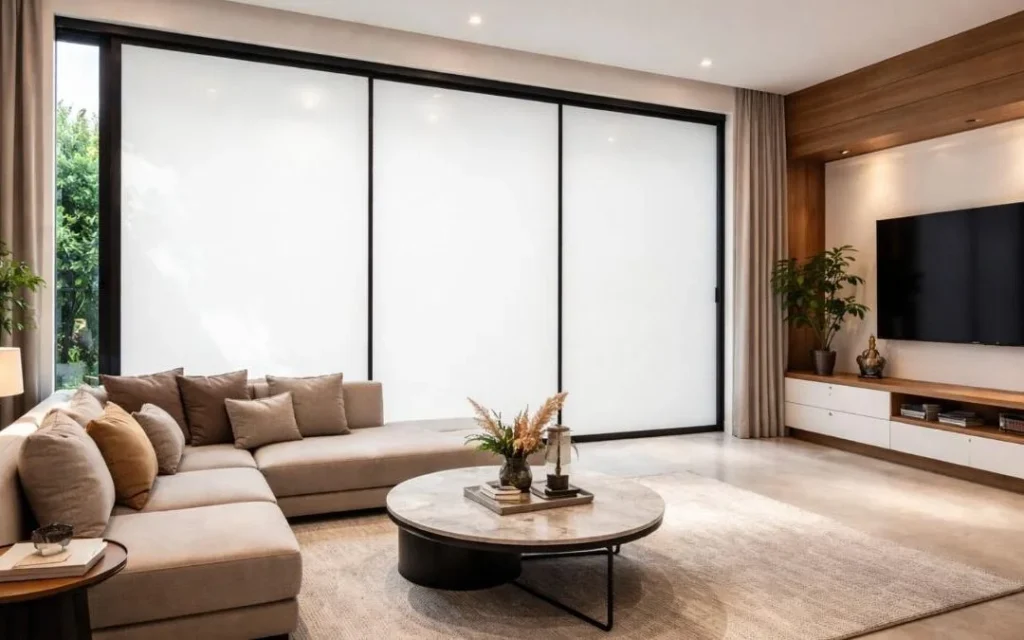
Residential Smart Glass in Santa Clara & Silicon Valley
Smart glass can add privacy to residential spaces without closing them off from natural light or changing the architectural appearance of the room.
It can be used in modern homes, remodeled interiors, bathrooms, bedrooms, home offices, and other areas where privacy needs change throughout the day.
Smart Glass for Bathrooms
Smart glass can provide on-demand privacy for bathroom windows, shower-adjacent glazing, interior partitions, and other areas where visibility needs to change.
Instead of using curtains or blinds, the glass can transition to a privacy state when needed while maintaining a clean architectural appearance.
The exact glass construction and installation method depend on the location
and project requirements.
Smart Glass for Bedrooms & Private Spaces
Bedrooms and other private areas can benefit from switchable privacy glass when homeowners want an open appearance at certain times and greater visual separation at others.
Smart glass can be incorporated into interior glass walls, doors, partitions, and selected window applications.
Smart Glass for Home Offices
A home office can remain visually connected to the rest of the home while still providing privacy when work, meetings, or confidential conversations require it.
Smart glass gives homeowners the ability to change the level of visual separation without permanently closing the office behind a solid wall.
Smart Glass Room Dividers
Smart glass can be incorporated into interior room-divider systems where flexible privacy is important.
A transparent glass divider can maintain an open floor plan, while the switchable privacy function allows the space to become visually separated when required.
This can work particularly well in contemporary homes where maintaining natural light and visual continuity is part of the design.
Commercial Smart Glass in Santa Clara & Silicon Valley
Commercial spaces often need privacy without sacrificing natural light or the open appearance of modern interiors.
Smart glass can provide flexible privacy for offices, conference rooms, executive spaces, healthcare environments, hospitality projects, and other commercial interiors
Smart Glass Office Partitions
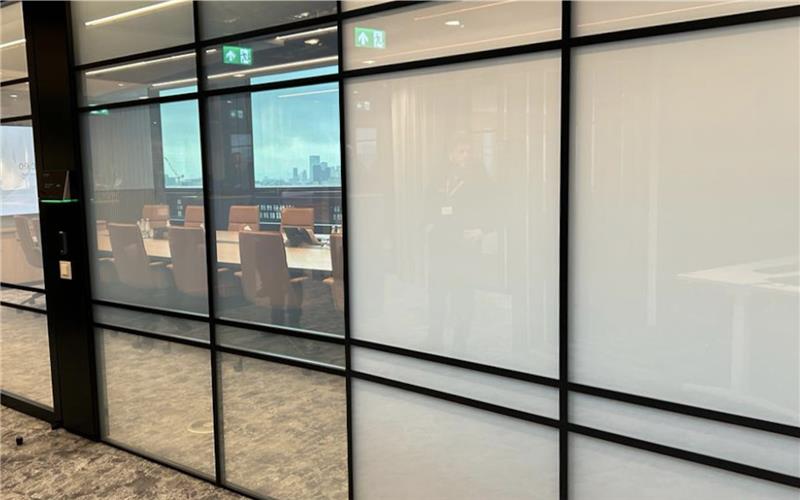
Smart glass can be integrated into office partition systems to create private rooms without making the entire workspace feel closed.
Clear glass can maintain visibility and daylight, while the privacy state can be used when employees need focused work or confidential conversations.
This makes switchable glass particularly useful for modern office layouts where transparency and privacy need to coexist.
Smart Glass Conference Rooms
Conference rooms are one of the most practical applications for switchable privacy glass.
A conference room can remain transparent during normal office activity and transition to a privacy state for:
- Confidential meetings
- Executive discussions
- Interviews
- Client meetings
- Presentations
- Sensitive business conversations
This provides visual privacy without permanently covering the glass with blinds or curtains
Smart Glass for Executive Offices
Executive offices often require a combination of architectural appearance and privacy.
Smart glass can maintain a clean, contemporary glass-wall design while allowing the occupant to control visibility when privacy is required.
Smart Glass for Healthcare & Professional Spaces
Switchable privacy glass can be useful in healthcare, medical, dental, and professional environments where visual privacy may change throughout the day.
Potential applications include:
- Treatment areas
- Consultation rooms
- Examination spaces
- Private offices
- Waiting areas
- Interior observation areas
The final glass specification should be selected according to the specific application, safety requirements, cleaning requirements, and applicable project standards.
Smart Glass for Hospitality & Retail
Hotels, restaurants, showrooms, and other customer-facing spaces can use smart glass to create flexible privacy and architectural effects.
Depending on the project, switchable glass can be used for private rooms, interior partitions, display areas, meeting spaces, and other locations where visibility needs to change.
Switchable Privacy Glass: How Smart Glass Works
Most switchable privacy glass systems used for on-demand privacy rely on Polymer Dispersed Liquid Crystal (PDLC) technology.
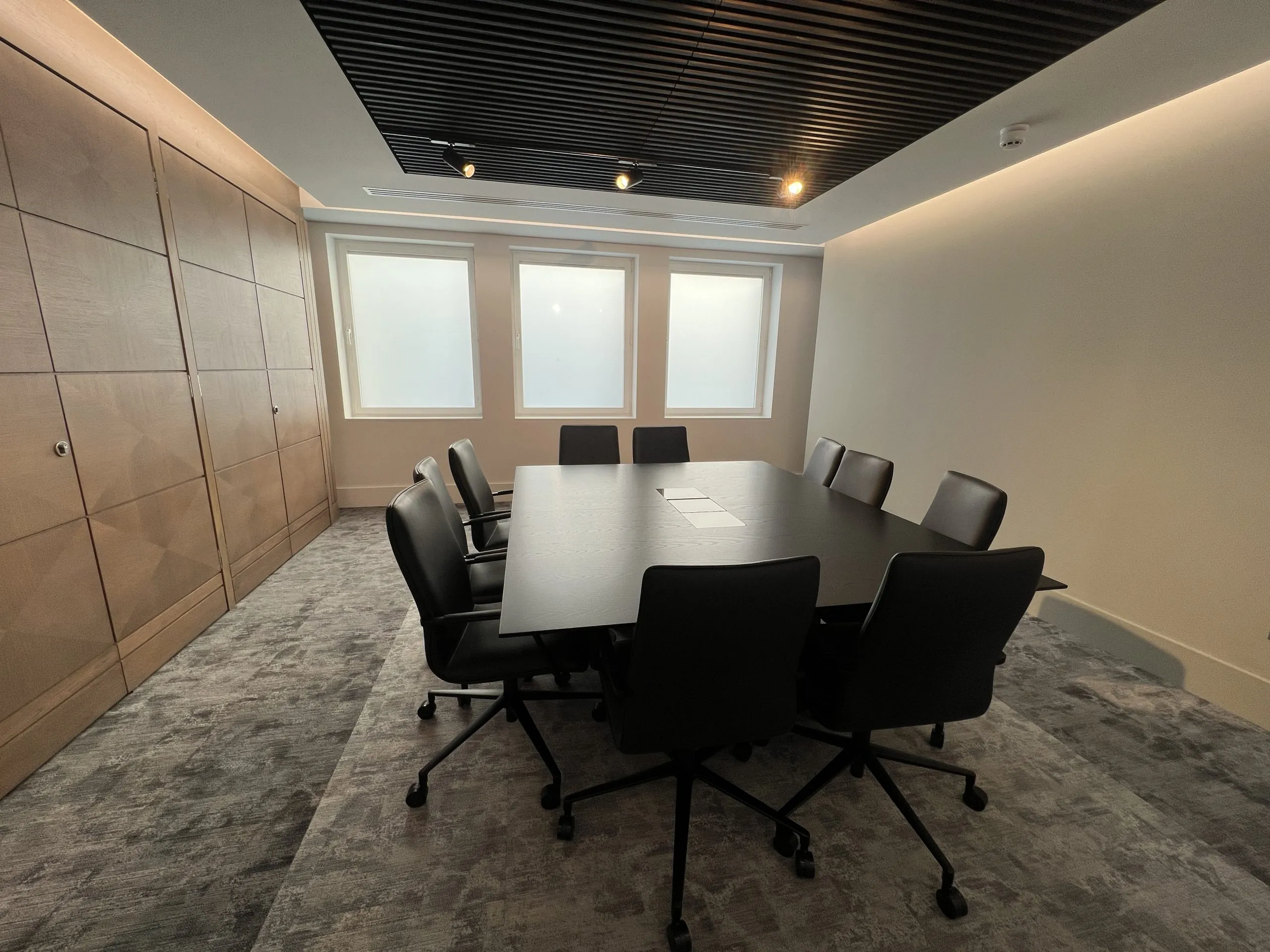
The switchable layer changes the way light passes through the glass when electrical power is applied. In a typical PDLC system, the glass is transparent in its powered state and becomes a diffused or privacy appearance when power is removed. Exact operating behavior depends on the selected manufacturer and system.
This allows the same glass surface to provide two different visual conditions:
Transparent:
The glass maintains visibility and allows the space to remain visually open.
Privacy:
The glass becomes diffused, reducing visibility through the surface.
The result is privacy on demand without physically moving a blind, curtain, or shade.
Smart Glass vs. Smart Film
Smart glass and smart film can provide similar switchable privacy functionality, but they are used differently.
Smart Glass
Smart glass is manufactured with the switchable technology incorporated into the glass assembly.
This approach is generally considered when the project involves new glass or a complete glass replacement.
It can be specified as part of a new partition, door, window, wall, or other glass system where the smartglass construction is incorporated from the beginning.
Smart Film
Smart film is a switchable film that can be applied to suitable existing glass.
This makes it useful for retrofit projects where the existing glass is in acceptable condition and the customer wants to add switchable privacy without replacing the entire glass panel.
Existing glass must be evaluated for suitability before a retrofit is recommended. Surface condition, dimensions, edges, wiring, mounting details, and the intended application all affect the installation.
Smart film is commonly positioned as a retrofit solution for existing interior glass, doors, windows, and partitions.
Smart Glass Installation for New Projects
For new construction and major remodeling projects, smart glass can be incorporated into the design from the beginning.
This allows the glass, electrical requirements, framing, doors, partitions, and surrounding construction to be coordinated before installation.
Planning early is particularly important because smart glass requires electrical connections and control components in addition to the normal
glass and framing requirements.
New smart-glass installations can be considered for:
- Office partitions
- Conference rooms
- Interior glass walls
- Glass doors
- Residential room dividers
- Bathroom privacy applications
- Executive offices
- Healthcare spaces
- Hospitality interiors
- Custom architectural interiors
Smart Film Retrofit for Existing Glass
Smart film can provide another option when existing glass is already installed and the customer wants to add switchable privacy.
A retrofit project begins with evaluating the existing glass and determining whether it is suitable for smartfilm installation.
Important considerations include:
- Existing glass condition
- Glass dimensions
- Surface condition
- Edge access
- Existing framing
- Electrical access
- Wire routing
- Control location
- Room conditions
- Desired privacy level
The existing glass should not be assumed to be suitable for smart film without an evaluation.
Smart Glass for Doors
Switchable privacy technology can also be incorporated into glass doors where privacy needs change throughout the day.
Potential applications include:
- Office doors
- Conference room doors
- Private-room doors
- Residential interior doors
- Medical and professional spaces
- Hospitality interiors
The glass, door frame, hinges or sliding hardware, electrical connection, and control system all need to be coordinated as part of the complete door installation.
For existing doors, the feasibility of a smart-film retrofit depends on the existing glass and door construction.
Smart Glass for Windows
Smart glass and smart film can also be considered for selected window applications where adjustable privacy is important.
Potential uses include:
- Bathroom windows
- Office windows
- Interior observation windows
- Conference room glazing
- Residential privacy windows
- Commercial interior glazing
For exterior window applications, the appropriate glass or film must be selected according to the window construction, exposure, temperature, electrical requirements, and manufacturer’s specifications.
Smart glass should not be treated as a universal replacement for every type of exterior energy-efficient window. The appropriate product depends on the specific window and project requirements.
Smart Glass for Glass Partitions
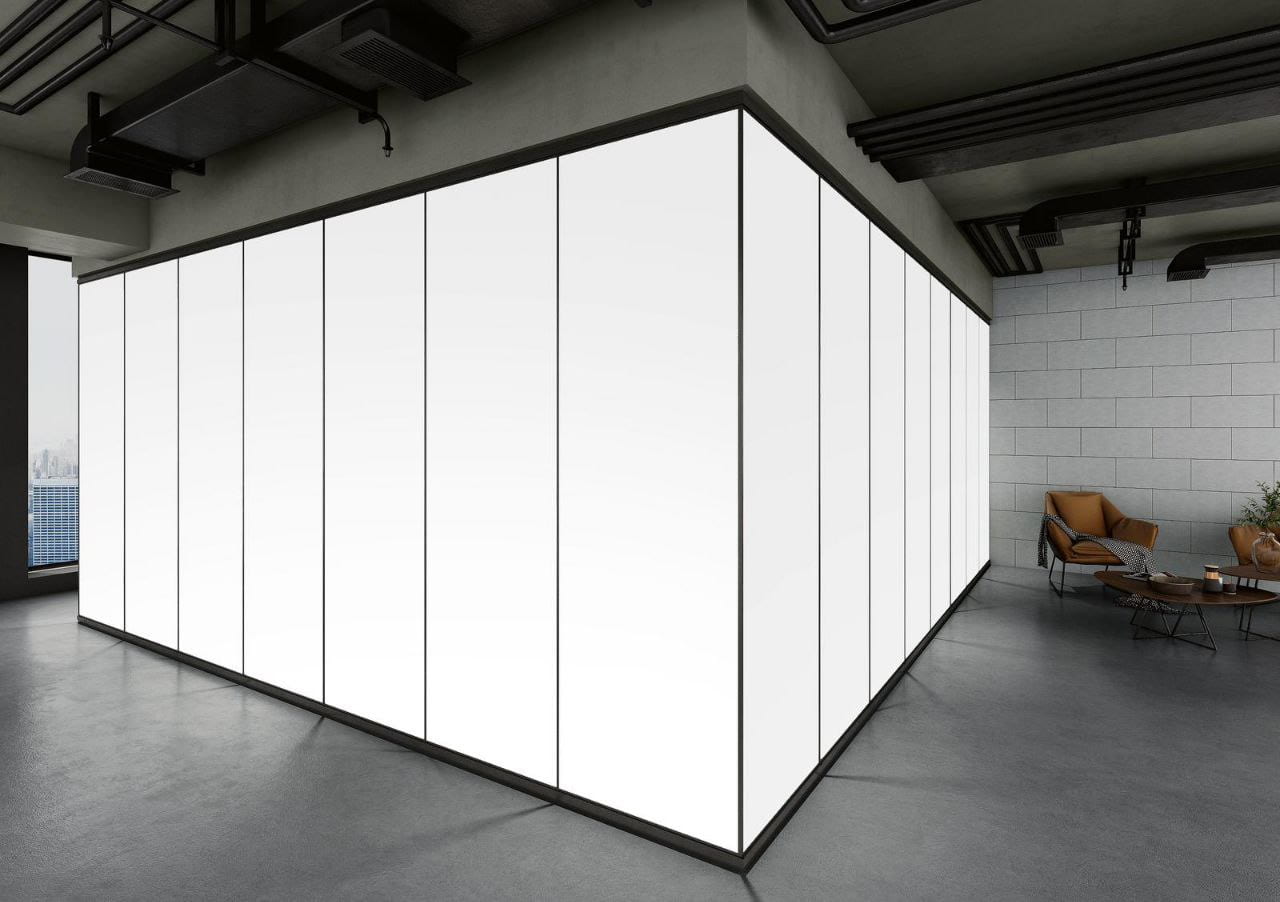
Smart glass is a natural extension of interior glass partition systems.
A clear glass partition can preserve an open office or interior layout, while the switchable function can provide privacy when required.
This can be particularly useful for:
- Conference rooms
- Executive offices
- Medical consultation rooms
- Private offices
- Home offices
- Interior meeting rooms
- Reception areas
For projects that already use glass partitions, smart film may also provide a retrofit option where the existing glass is suitable
Privacy, Light & Modern Interior Design
One of the main advantages of smart glass is that privacy does not necessarily require blocking the entire glass surface with a conventional window covering.
When transparent, the glass maintains the open visual character of the room.
When switched to its privacy state, visibility is reduced while the glass continues to function as part of the architectural interior.
This makes smart glass useful in spaces where designers want to combine:
- Natural light
- Open sightlines
- Flexible privacy
- Minimalist appearance
- Modern architectural design
Smart Glass Controls & Automation
Depending on the selected smart-glass system, the glass may be controlled using a wall switch, remote control, or other compatible control system.
Some smart-glass systems can also be integrated into broader building or smart-home control environments, subject to the capabilities of the selected manufacturer and control equipment.
The control method should be determined during project planning because the electrical connection and control location need to be coordinated with the glass installation.
For commercial projects, controls can be planned around the room layout and how occupants use the privacy function.
For residential projects, controls can be coordinated with the home’s existing electrical or automation system where compatible.
Smart Glass Installation & Replacement Process
Every smart-glass project is different because the technology has to be coordinated with the existing or planned glass system.
1. Project Consultation
We review where the smart glass will be used, why privacy is needed, whether the project involves new glass or existing glass, and how the space is intended to function.
2. Existing Glass or Opening Evaluation
For replacement and retrofit projects, the existing glass, frame, opening, and surrounding conditions are evaluated to determine the appropriate installation approach.
3. Smart Glass or Smart Film Selection
The appropriate technology is selected based on whether the project requires new switchable glass or a retrofit film solution.
4. Electrical & Control Planning
Smart glass requires electrical connections and control components. Wiring locations, power requirements, switches, and control access need to be coordinated before installation.
5. Measurement & Fabrication
Accurate dimensions are important because switchable glass and film systems are manufactured or prepared for the specific glass opening.
6. Professional Installation
The glass or film is installed and coordinated with the surrounding frame, door, partition, or window system.
7. Testing & Final Adjustment
The completed system is tested to confirm the switching function and operation of the selected control system.
Smart Glass Replacement & Upgrades
Smart glass can also be part of an interior upgrade or complete glass replacement project.
For an existing space, the project may involve replacing conventional glass with new switchable smart glass.
Where the existing glass is suitable, smart film may provide an alternative retrofit approach.
The right solution depends on the condition and construction of the existing glass, the desired appearance, electrical access, privacy requirements, and the specific smart-glass technology selected.
Smart Glass for Silicon Valley Offices & Modern Buildings
One of the main advantages of smart glass is that priSanta Clara and Silicon Valley properties often feature open offices, glass conference rooms, contemporary interiors, and spaces where natural light and visual connection are important.
Smart glass allows these spaces to retain the architectural benefits of glass while adding a controllable privacy function.
It can be particularly useful for:
- Technology offices
- Corporate offices
- Conference rooms
- Executive suites
- Medical offices
- Professional offices
- Modern residential interiors
- Hospitality projects
- Custom architectural
Residential & Commercial Smart Glass Gallery
Our smart glass gallery should demonstrate both residential and commercial applications rather than combining unrelated glass projects into the same gallery.
Residential Smart Glass Projects
Residential examples can include:
- Bathroom privacy glass
- Home office glass
- Interior room dividers
- Smart glass doors
- Bedroom privacy applications
- Custom residential interiors
Commercial Smart Glass Projects
Commercial examples can include:
- Glass conference rooms
- Private offices
- Executive offices
- Medical spaces
- Commercial glass partitions
- Reception areas
- Corporate interiors
- Tenant improvement
The gallery should use actual Santa Clara Glass Inc. projects and show the smart glass in both transparent and privacy states whenever possible.
Frequently Asked Questions About Smart Glass
What is smart glass?
Smart glass is glass that can change its visual state using an electrical control system. Switchable privacy glass commonly uses PDLC technology to transition between a transparent state and a diffused privacy state.
What is switchable privacy glass?
Switchable privacy glass is glass designed to change between transparent and privacy states when controlled electrically. It provides on-demand visual privacy without requiring conventional blinds or curtains.
What is the difference between smart glass and smart film?
Smart glass has the switchable technology incorporated into the glass assembly, while smart film can be applied to suitable existing glass as a retrofit. Smart glass is commonly considered for new glass installations, while smart film can be useful when the existing glass is suitable for upgrading.
Can smart film be installed on existing glass?
In many cases, yes, provided the existing glass and installation conditions are suitable for the selected film system. The glass should be evaluated before a retrofit is recommended.
Can smart glass be used for office conference rooms?
Yes. Conference rooms are one of the common applications for switchable privacy glass because the room can remain visually open during normal use and become more private for meetings or confidential discussions.
Can smart glass be used in residential homes?
Yes. Smart glass can be used in selected residential applications including bathrooms, bedrooms, home offices, room dividers, interior glass walls, and doors.
Can smart glass be installed in a glass partition?
Yes. Smart glass can be incorporated into new glass partition systems, and suitable existing partitions may also be candidates for smart-film retrofit.
Can smart glass be used in doors?
Yes. Switchable glass can be incorporated into selected interior and architectural door applications. The glass, door system, electrical connection, and control method need to be coordinated together.
Can smart glass replace blinds or curtains?
Smart glass can provide an alternative to conventional visual privacy treatments in applications where switchable privacy is appropriate. However, it does not perform exactly the same function as every type of blind or shade, particularly when complete light-blocking or solar-shading is required.
Does smart glass need electricity?
Yes. Switchable smart-glass systems require electrical power and appropriate control components to change their state. The electrical connection must be planned as part of the installation.
Can smart glass be controlled by a switch?
Many switchable systems can be controlled by a wall switch or other compatible control device. Depending on the selected system, additional control methods may also be available.
Can smart glass be connected to a smart-home system?
Some smart-glass systems can be integrated with compatible automation systems. The available integration depends on the selected manufacturer, controller, and project requirements.
Can smart glass provide complete privacy?
Switchable privacy glass is designed to reduce visibility when in its privacy state, but the exact level of privacy depends on the selected product, lighting conditions, glass construction, and installation. Productspecific performance should be reviewed before specifying the system.
Can smart glass provide soundproofing?
Smart glass should not automatically be described as “soundproof.” Acoustic performance depends on the complete glass assembly, thickness, lamination, framing, seals, and surrounding construction. Where acoustic privacy is important, the complete system should be specified for the project.
Can smart glass block UV?
Some smart-glass and smart-film systems provide substantial UV rejection, but the exact performance depends on the selected product. UV-performance claims should therefore be based on the manufacturer’s current technical specifications rather than assumed for every smart-glass system.
Can you replace existing glass with smart glass?
Yes. Existing glass can potentially be replaced with a new switchable smart-glass assembly when the opening and surrounding system are suitable.
Can you retrofit existing glass with smart film?
Yes, when the existing glass and installation conditions are suitable. Smart film is specifically used as a retrofit approach for certain existing interior glass, windows, doors, and partitions.
Can you retrofit Is smart glass suitable for commercial projects?glass with smart film?
Yes. Smart glass can be used in offices, conference rooms, healthcare environments, hospitality spaces, retail environments, and other commercial interiors where controllable privacy is valuable.
Is smart glass suitable for every window or door?
No. The correct product depends on the glass, frame, location, exposure, electrical requirements, privacy needs, and intended use. A project should be evaluated before a specific smart-glass or smart-film system is selected.